Податотека:Sirius A and B artwork.jpg
Прејди на прегледникот
Прејди на пребарувањето
Големина на овој преглед: 800 × 600 пиксели. Други разделности: 320 × 240 пиксели | 640 × 480 пиксели | 1.024 × 768 пиксели | 1.280 × 960 пиксели | 2.560 × 1.920 пиксели | 4.000 × 3.000 пиксели.
Изворна податотека (4.000 × 3.000 пиксели, големина: 4,11 МБ, MIME-тип: image/jpeg)
|


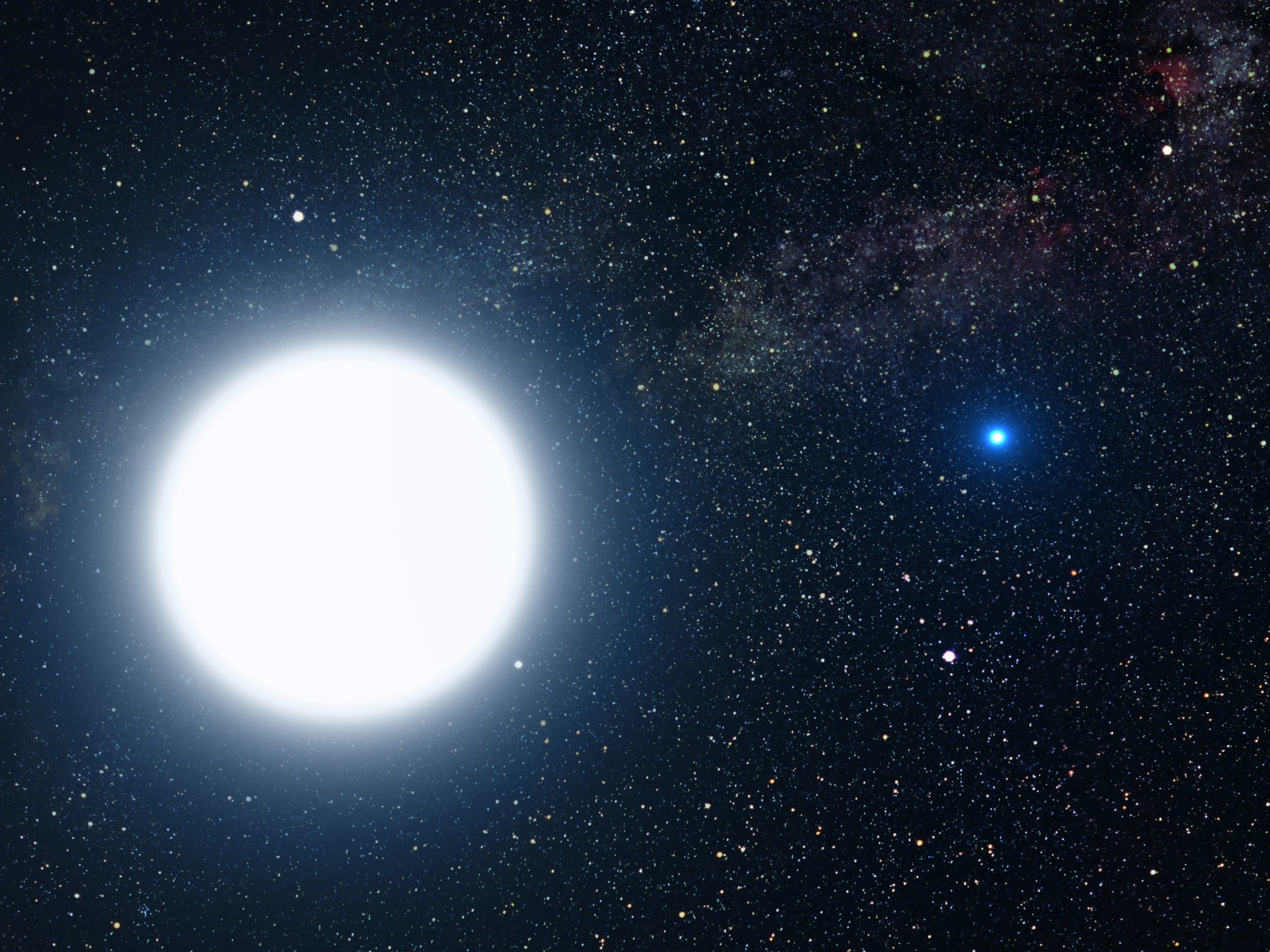
| Опис | This picture is an artist's impression showing how the binary star system of Sirius A and its diminutive blue companion, Sirius B, might appear to an interstellar visitor. The large, bluish-white star Sirius A dominates the scene, while Sirius B is the small but very hot and blue white-dwarf star on the right. The two stars revolve around each other every 50 years. White dwarfs are the leftover remnants of stars similar to our Sun. The Sirius system, only 8.6 light-years from Earth, is the fifth closest stellar system known. Sirius B is faint because of its tiny size. Its diameter is only 7,500 miles (about 12 thousand kilometres), slightly smaller than the size of our Earth. The Sirius system is so close to Earth that most of the familiar constellations would have nearly the same appearance as in our own sky. In this rendition, we see in the background the three bright stars that make up the Summer Triangle: Altair, Deneb, and Vega. Altair is the white dot above Sirius A; Deneb is the dot to the upper right; and Vega lies below Sirius B. But there is one unfamiliar addition to the constellations: our own Sun is the second-magnitude star, shown as a small dot just below and to the right of Sirius A. |
| Датум | 13 December 2005, 15:00 |
| Извор | http://www.spacetelescope.org/images/heic0516b/ |
| Автор | NASA, ESA and G. Bacon (STScI) |

|
Оваа податотека е во јавна сопственост бидејќи е дело на НАСА и ЕСА. Материјалот од „Хабл“ на НАСА (и материјалот од „Хабл“ на ЕСА пред 2009 г.) не е заштитен со авторски права и може слободно да се користи како јавносопственички без надомест, под услов да се наведат само NASA, STScI, и/или ЕСА како извор на материјалот. Оваа лиценца не важи доколку материјалот на ЕСА е создаден по 2008 г. или се користи изворен материјал од други организации.
Материјалот е создаден за НАСА од Научниот институт за вселенски телескопи со договорот NAS5-26555, или за ЕСА од Информативниот центар за „Хабл“ на Европската вселенска агенција. Изјава за авторски права на hubblesite.org или Изјава за авторски права од 2008 г. на spacetelescope.org. За материјали создадени од Европската вселенска агенција на порталот spacetelescope.org од 2009 г. наваму, користете ја ознаката {{ESA-Hubble}}. |
Историја на податотеката
Стиснете на датум/време за да ја видите податотеката како изгледала тогаш.
| Датум/време | Минијатура | Димензии | Корисник | Коментар | |
|---|---|---|---|---|---|
| тековна | 18:15, 10 декември 2007 | | 4.000 × 3.000 (4,11 МБ) | wikimediacommons>DENker | higher quality image |
Употреба на податотеката
Податотекава се користи во следнава страница:
